About Rice Length Grader-PLG 700
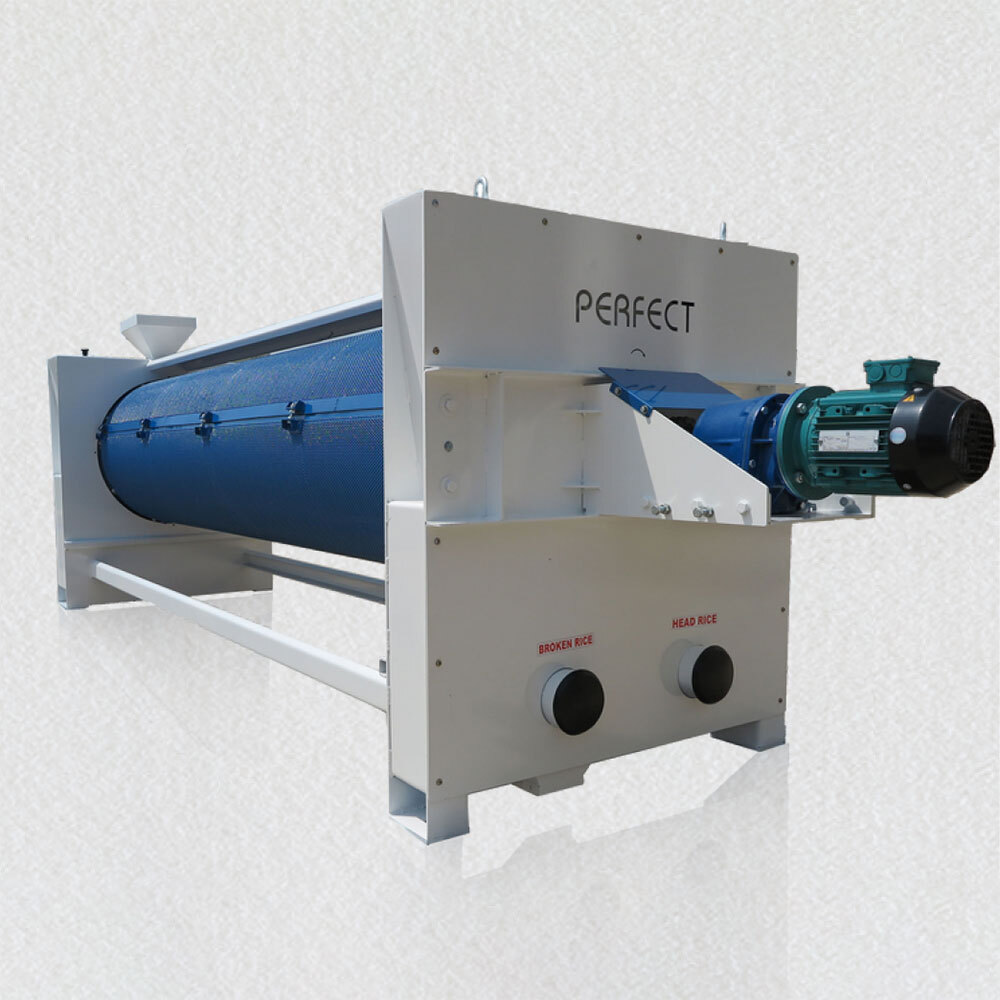
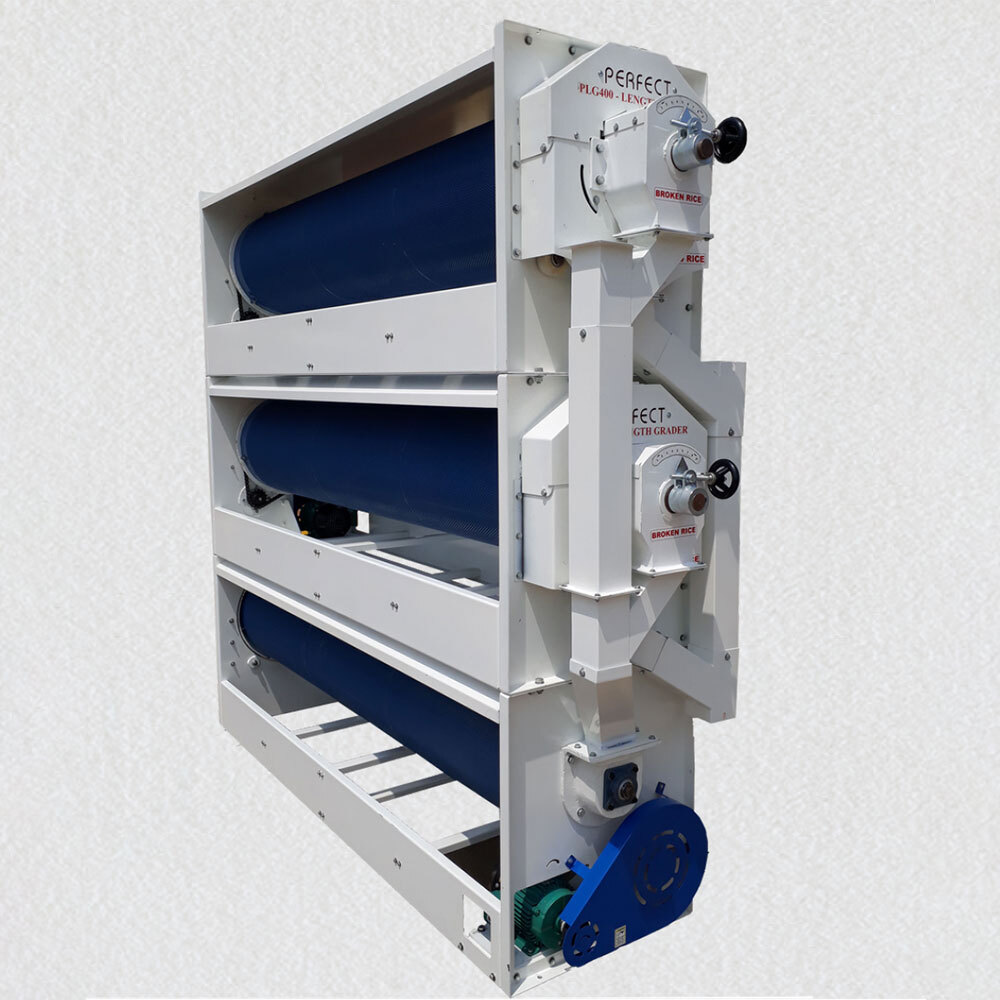
Perfects length grader is used for separating the broken rice from the head rice. When the rice is passed through the intended cylinder, broken rice is collected in an U Trough and discharged by a screw conveyor.
Salient Features
- Low maintenance,
- Easy adjustment of grading accuracy.
- Fitted with Nylon brush for self- cleaning of Indents.
- Specially designed Indents for accuracy of separation.
| Model No. |
Capacity of Rice, TPH |
Power, HP x RPM |
Overall Dimension in MM
(L x W x H)
|
Weight in Kgs (App.) |
| PLG 1 |
2.5 |
2 |
4350 x 1100 x 1450 |
875 |
| DLG 1 |
5 |
2 + 2 |
4350 x 1100 x 2900 |
1750 |
Advanced Technology for Consistent Rice GradingThe PLG 700 Rice Length Grader utilizes mechanical grain length grading technology with high accuracy. Its variable working speed and multiple rollers allow precise separation of both raw and parboiled rice. With an integrated feed hopper and dual discharge ports, the grader ensures streamlined operation. Its perforated screen and air-cooled system further enhance reliability and consistency, while easy accessibility supports efficient maintenance routines.
Built for Efficiency and DurabilityConstructed with a stainless steel shell and a mild steel fabricated frame, the PLG 700 offers remarkable durability in demanding environments. A powder-coated surface and grease lubrication system contribute to its longevity and low maintenance requirements. Designed for floor-mounted installation, the grader's robust drive system and overload protection improve operational safety and equipment life. The blue and white finish underscores both functionality and aesthetic appeal.
Ideal Application in Rice Mills and Processing UnitsTailored for rice mills and grain processing industries, the PLG 700 suits applications where precise grading of rice is critical. Its high production capacity (3-4 tons/hour) meets the needs of industrial-scale operations. The machine's low noise, ambient temperature operation, and manual input controls ensure convenience and adaptability in a variety of processing environments, making it an industry choice for manufacturers and service providers across India.
FAQ's of Rice Length Grader-PLG 700:
Q: How does the PLG 700 Rice Length Grader separate grains by length?
A: The PLG 700 uses a mechanical grading system with a perforated screen and multiple rollers. Rice passes through the 700 mm drum, where grains of different lengths are sorted based on size and discharged through dual ports for collection.
Q: What types of rice can be graded with this machine?
A: This length grader is suitable for both raw and parboiled rice. Its robust design and variable speed operation allow consistent performance across a variety of grain conditions.
Q: When is maintenance required for the PLG 700, and is it easy to perform?
A: Routine maintenance should be carried out according to operation hours and grain load. The machine is engineered for easy maintenance, featuring accessible lubrication points and simple drum and screen replacements.
Q: Where is the best place to install the PLG 700 in a processing facility?
A: The grader is floor mounted and should be installed in a stable, level area within the rice mill or grain processing unit, ensuring adequate space for feed input and dual discharge collection.
Q: What is the grading process of the PLG 700?
A: The process starts with rice entering the integrated feed hopper. The electrically driven drum rotates, enabling the rice to be graded via the perforated screens and multiple rollers, with automatic separation into different lengths at the discharge ports.
Q: How does overload protection benefit users?
A: Overload protection safeguards the machine's internal components from damage caused by excessive load, thereby reducing downtime and prolonging equipment life, which is essential for continuous rice processing environments.
Q: What are the main advantages of using the PLG 700 in a rice mill?
A: This machine ensures precise and high-speed grading, minimal maintenance, low noise, and robust build quality. These features enable increased productivity, consistent output, and lower operational costs for rice mills and grain processors.





 Send Inquiry

 Send Inquiry
 Send Inquiry